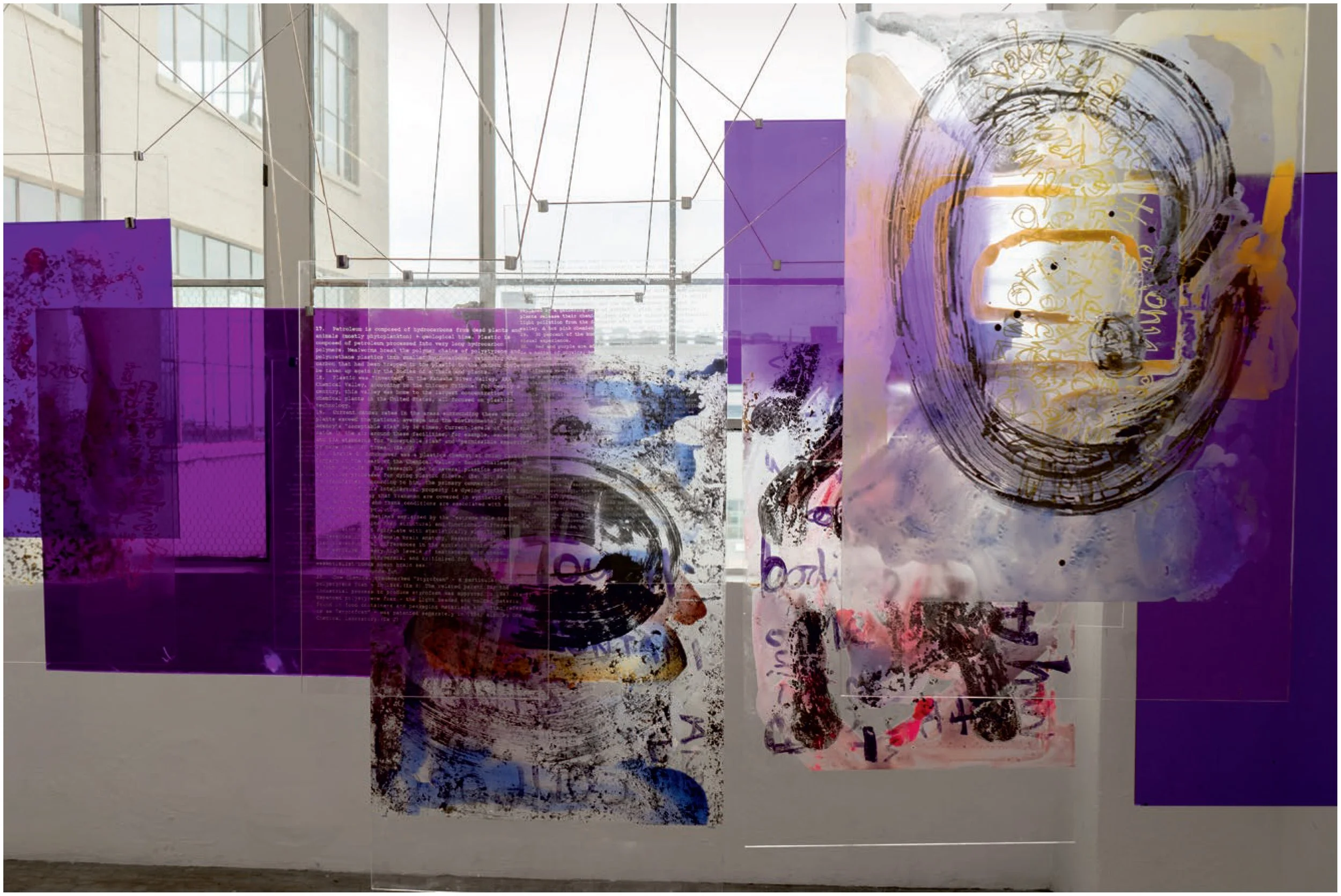
Dysphoric Aesthetics: Toward Trans Ethics of Spectatorial Sensitivity
by Lex Morgan Lancaster
In this essay the author theorizes “dysphoric aesthetics” by moving dysphoria beyond its medical deployment as a pathologizing criteria toward a method for trans ethics and aesthetics. Lancaster proposes that embodied encounters with trans art practices can elicit generative dysphoric experiences. In so doing, they contribute a trans approach to activated spectatorship, which takes seriously how art can cultivate embodied responses that have the capacity to affectively and somatically change us, as well as expand our own capacities for sensitive attunement to others and the world. As exemplary models of dysphoric aesthetics, the installation works of multidisciplinary artists P. Staff (b. 1987) and Ashton S. Phillips (b. 1981) mobilize sites of struggle and disturbance to attend to the difficulties of relational embodiment in the context of exploitative and oppressive biopolitical systems. Staff’s and Phillips’s work demonstrates that dysphoric aesthetics refuses to deliver some easily liberated version of trans subjectivity in a state of cured completion, or to reveal a trans subject at all; rather, their work materializes methods for working with feeling and sensation that are deeply political. Such work specifically deploys material and conceptual forms of contamination—primarily toxicity and plasticity—to create embodied awareness of the ways we are fundamentally enmeshed with the more-than-human world and conditioned by environmental contaminants. The installations of these artists become sites for exploring social and political harm in an aesthetic realm that won't limit us to those sites, in relation with other species and processes used to expel some from the status of the human. These encounters prompt us to stay with the discomfort to work with and through the unmanageable conditions that make some of us dysphoric.
Lancaster, L. M. (2026). Dysphoric Aesthetics: Toward Trans Ethics of Spectatorial Sensitivity. Art Journal, 85(1), 78–95. https://doi.org/10.1080/00043249.2026.2624352

Subverting the Cisgaze: Antennae Journal
Summer 2024
Thinking and feeling with a multisensory Womb/Tomb/BooM of plastic bodies - insect, polystyrene, and human, this essay theorizes, critiques, and examines ways of subverting the “cishuman” gaze, including its fixation on legibility, moral and material purity, and its desire for complete and “resolved”works/bodies/objects. Can art embrace a poetics of opacity and illegibility, focusing on the pleasure, discomfort, and generative power of darkness and perpetual metamorphosis, instead? Can we frustrate the power dynamics of pity and objectification by inviting “viewers” into environments that confront them with the impurity, vulnerability, and plasticity (or transness) of their own bodies.

Womb/Tomb/BooM: Trans Studies Quarterly
July 2024
Womb/Tomb/BooM is a multisensory, trans-ecological art installation that invites human visitors to share space, air, and flesh with styrofoam-metabolizing beetle larvae and the plastic waste they inhabit and consume. Wherever possible, barriers between human, insect, and plastic have been removed to create a shared sensory wormspace of metamorphosis-friendly light, sound, and material. Where those barriers could not be removed, the barriers themselves become key actors in the space, frustrating the cisgender gaze's desire for a good-hard look at these shape-shifting insects and structuring the ways that humans can and cannot move through the space.

Scientia Sexualis at the Institute of Contemporary Art, Los Angeles
March 18, 2025
In a world of raging anti-trans animus, where so many are working so feverishly to cement a flat stereotype of us as fearsome predators and tragic victims, the intersectional breadth, multiplicity, and specificity of trans voices, aesthetics, and thought brought together in the Institute of Contemporary Art, Los Angeles’ (ICA LA) Scientia Sexualis hit like medicine. Yowling trans rage sits beside howls of trans humor and pleasure. Wails of trans grief slip into yips of kink-fueled, imperfect liberation. Pulling its title from Michel Foucault’s The History of Sexuality, Vol. 1 (1976), a canonical text that critically examines the development of Western conceptions of sex and sexuality, Scientia Sexualis brings together work from 28 multidisciplinary artists refusing simplistic, colonial, and cis-heteronormative ways of thinking and feeling about art, science, and sex.
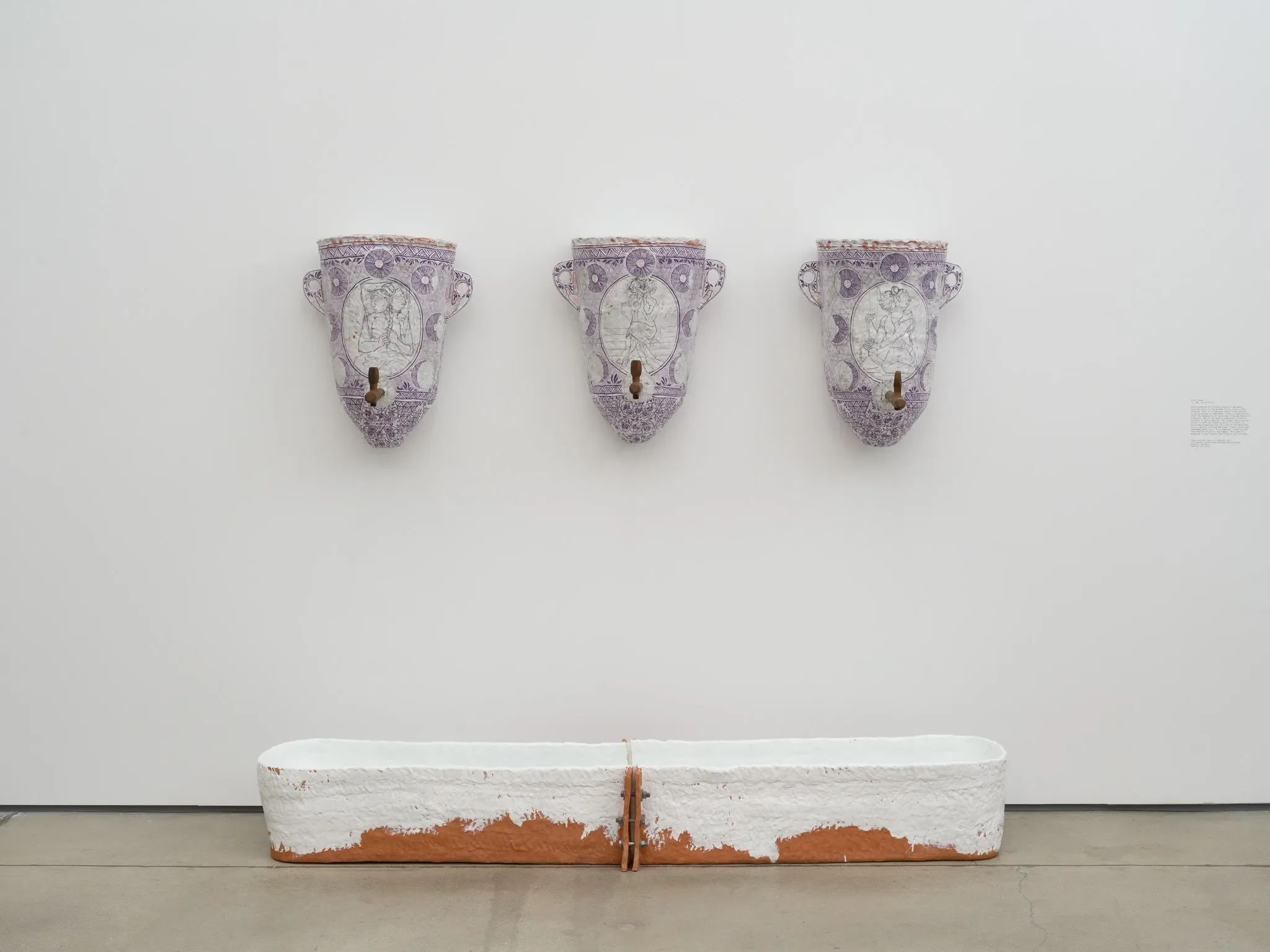
Defying Erasure and Straddling Worlds with Scientia Sexualis at the Institute of Contemporary Art, Los Angeles
Scientia Sexualis at the Institute of Contemporary Art, Los Angeles (ICA LA), is an exhibit that straddles multiple worlds and histories, from the eerily resonant fascist book burnings of an earlier era in dean erdman's 38 to the pre‐Hispanic homoerotic sculptures of Cartos Motta's Towards a Homoerotic Historiography to the bodies of enslaved Black women forced to endure medical experimentation in KING COBRA's After Her Tomb and Vesico Vaginal Fistula, to the glam‐pop, pink‐glitter pleasure present in Young Joon Kwak and Gala Porras‐Kim's Objects of Pleasure. Having opened in October 2024 before the presidential election and closed in March 2025 after the Trump administration's inauguration and first month in power, Scientia Sexualis also straddled two different worlds during its run at the ICA LA.